
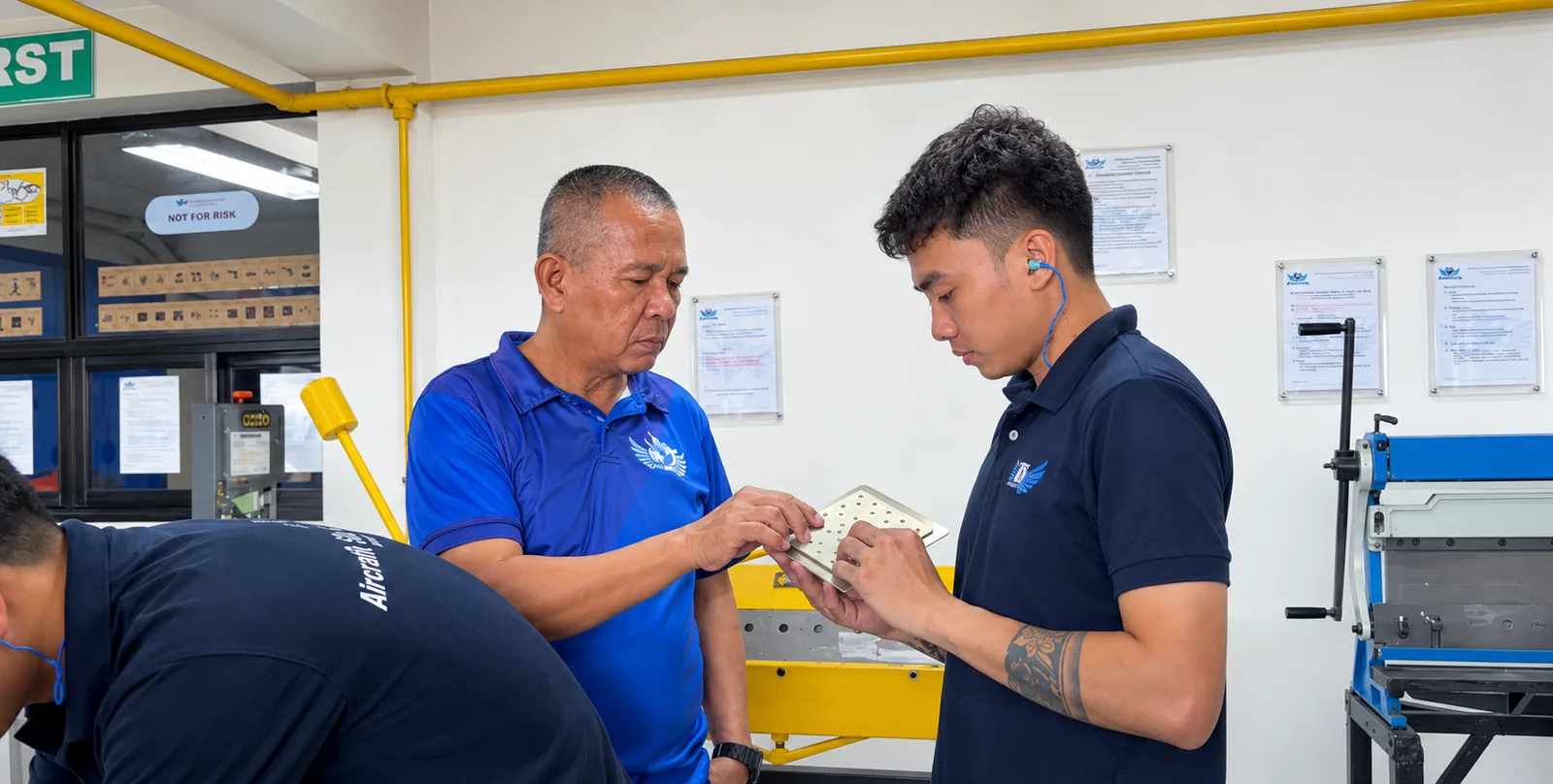
Training and instruction
Our technical training spans structures and sheetmetal, cabin interior maintenance, electrical and avionics, and the Maintenance Training Program. The training team connects programme delivery with practical tasks and learner progress.
Knowledge and practical performance
Programmes combine theory examinations with practical assessment suited to the trade. Assessment may include written and oral tests, practical examination, observation, demonstration and assessed projects.
The task, criteria and evidence belong to the relevant programme. A result should be read alongside the work that was assessed.
Competency records
Practical work is assessed against the trade's competency checklist and recorded. Where a programme includes MRO exposure, tasks are logged and countersigned.
Employer discussions establish the task set, assessment records and completion documents required at handover.
Quality in daily practice
The Academy’s documented quality system covers document and record control, internal audit, corrective action and management review. New or tailored courses follow a documented planning and review process.
- Defined control of training and assessment records
- Tool control and foreign object debris discipline in practical work
- Review of findings and corrective action
- Safety reporting and workshop oversight
Making skills and progress visible
Avia Tech is introducing Talveris across its training programmes to help learners record practical experience, identify skills gaps and understand their progress. The framework gives instructors a structured way to connect training with the skills a developing aviation professional needs.
School-wide adoption is in progress.
Talveris is Aaspire LLP's verified credentialing platform.
A training outcome with a defined scope
Completion of an Avia Tech programme records a training and assessment outcome. Regulatory licensing and employer selection are separate decisions.
A programme record should identify what was taught and assessed. It does not replace the separate requirements of a regulator or employer.